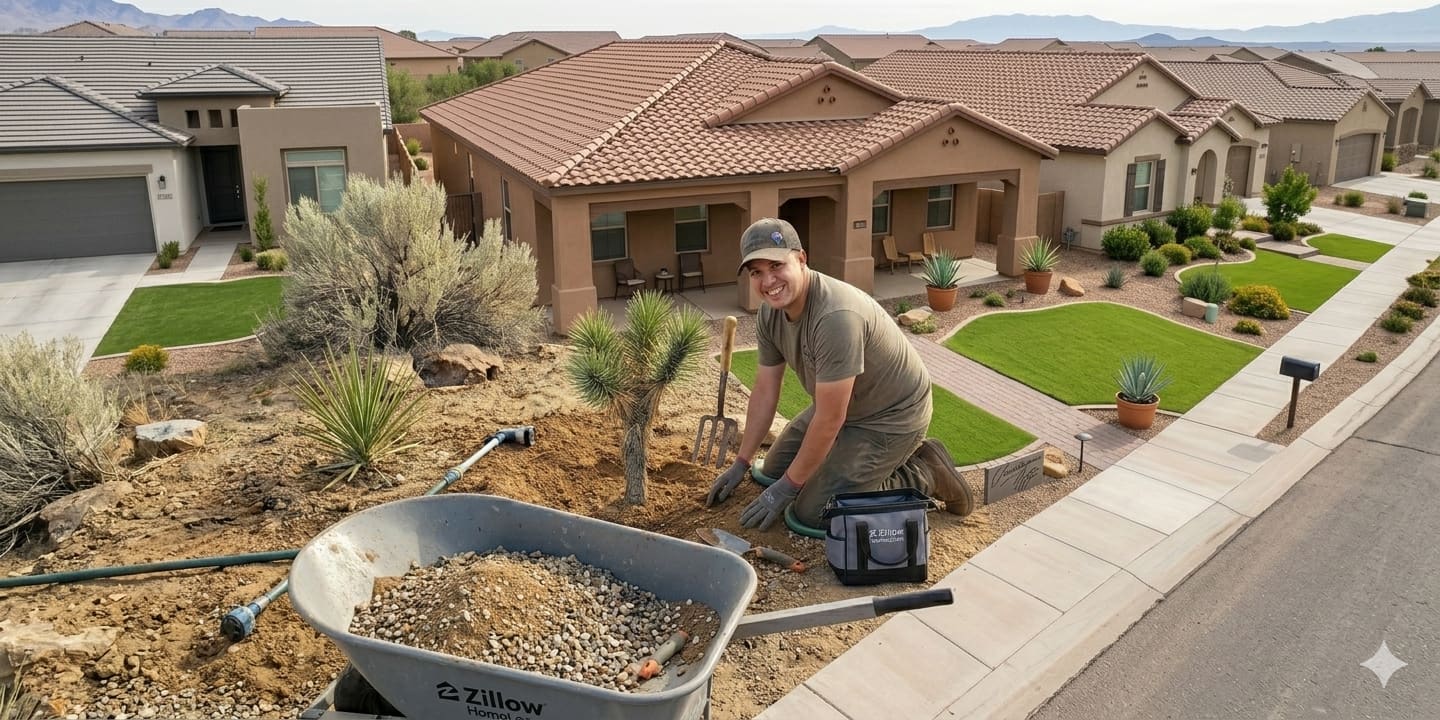
Living in the High Desert offers stunning mountain views and breathtaking sunsets, but it also presents a unique challenge for homeowners: the environment. Between the intense summer heat, freezing winter nights, and the ever-present wind, traditional landscaping often struggles to survive.
If you are ready to roll up your sleeves and boost your curb appeal, here is how to master DIY landscaping in our neck of the woods.
1. Embrace the "Xeric" Philosophy
In the High Desert, water is gold. Instead of fighting nature with a thirsty lawn, embrace Xeriscaping. This doesn't mean just a yard full of rocks; it means choosing drought-tolerant plants that thrive in our specific climate (USDA Zones 8-9).
Native Stars: Look for Desert Willow, Joshua Trees, Sagebrush, and various Agave species.
The Benefit: Once established, these plants require minimal water and can withstand the 100°F+ summer days.
2. Master the Soil (and Drainage)
Our soil is often heavy on sand or packed with caliche (a rock-like layer of calcium carbonate). Before planting:
Dig deep: Ensure you break through any hardpan layers so roots can grow.
Amend sparingly: While some organic compost helps, desert plants actually prefer lean soil. Too much fertilizer can cause "leggy" growth that fails when the wind picks up.
3. Hardscaping: The Skeleton of Your Yard
Hardscaping is your best friend in places like Victorville and Phelan. It adds texture and structure without needing a drop of water.
Decorative Rock: Use a mix of 3/4" crushed rock and larger river boulders to create visual interest.
Decomposed Granite (DG): This is perfect for DIY walkways. It packs down firmly and comes in beautiful earthy tones like gold and rose.
Mulch: In planting beds, use bark or rock mulch to keep the roots cool and retain what little moisture is in the ground.
4. Smart Irrigation (Drip is King)
Evaporation is the enemy. Overhead sprinklers lose most of their water to the wind and sun before it even hits the ground.
Install a Drip System: Run lines directly to the base of your plants.
Timing: Set your timers for the early morning (3:00 AM – 6:00 AM) to ensure the water soaks in before the sun gets high.
5. Wind Protection
The High Desert wind can shred delicate leaves. When designing your layout:
Create Windbreaks: Use sturdier shrubs or decorative fencing to protect smaller, more vulnerable plants.
Stake Early: Any new trees should be properly staked for at least the first two years to ensure they grow straight despite the gusts.
Quick DIY Tips for Success:
Start Small: Pick one corner of the front yard or a specific "island" to landscape first.
Check Local Rebates: Many local water districts offer "Turf Removal" rebates. You might actually get paid to switch to desert-friendly landscaping!
Group by Need: Put plants with similar water needs together (hydro-zoning) to avoid overwatering your cacti or underwatering your flowering shrubs.
Ready to get started? Grab a shovel and a pair of heavy-duty gloves—there's nothing quite as rewarding as watching a desert garden bloom in the middle of the High Desert!
Pro Tip: If you're looking to sell soon, desert-smart landscaping is a huge selling point. Buyers love the low maintenance and the lower water bills!
Recent Blog

Jess Ranch: Apple Valley’s Lakeside 55+ Community, Explained
Jess Ranch is one of those places in Apple Valley people talk about when they want a quieter, active-adult… Read More
Angie Flores / 09-11-2026
.png)
Desert-Smart Living: The Wildlife, Plants, and Climate Every High Desert Homeowner Should Know
Move to the High Desert and you inherit more than a house — you inherit a slice of the Mojave Desert, one of… Read More
Angie Flores / 09-11-2026

The Updated Home Appraisal Guide: Key Changes for Buyers and Sellers
The Basics: What’s Happening? Mortgage leaders Fannie Mae and Freddie Mac overhauled the home appraisal… Read More
Angie Flores / 09-02-2026