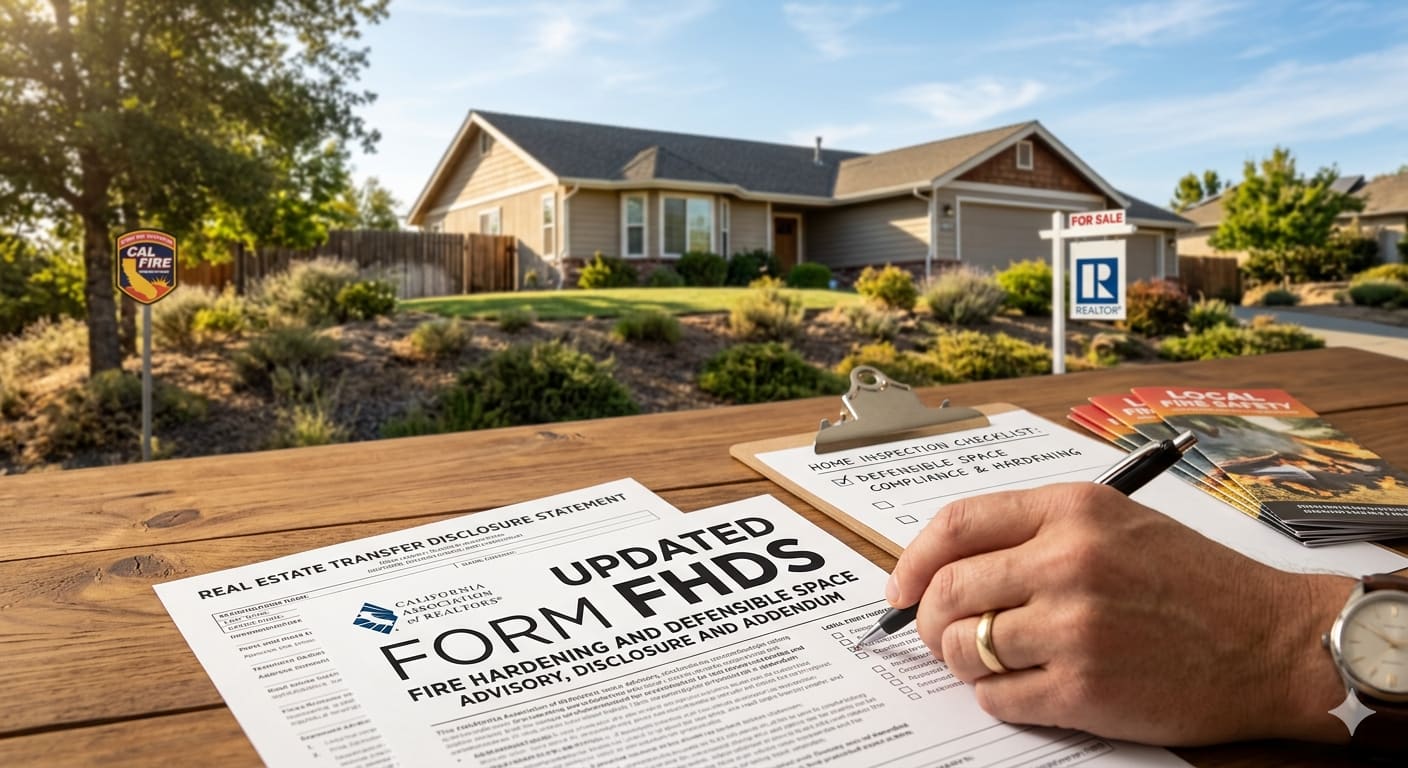
In California, wildfire safety isn’t just a seasonal conversation—it’s a year-round reality. If you are buying or selling a home in an area surrounded by hills, brush, or forest, fire safety compliance is directly tied to your real estate transaction.
The California Association of REALTORS® (C.A.R.) utilizes a critical document known as Form FHDS (Fire Hardening and Defensible Space Advisory, Disclosure, and Addendum). Recent updates to this form place a much heavier emphasis on transparency, detailed seller reporting, and explicit buyer agreements.
Whether you’re a seller looking to ensure a smooth escrow or a buyer wanting to protect your investment, here is a breakdown of what the updated FHDS form means for you.
What is Form FHDS and Who Does It Apply To?
The FHDS form is a mandatory disclosure designed to ensure properties comply with state and local defensible space laws and to identify structural vulnerabilities to flying embers (home hardening).
The form is legally required if your transaction meets all of the following criteria:
It is a residential property (1–4 units, condos, or manufactured homes).
The property is located in a designated High or Very High Fire Hazard Severity Zone (FHSZ).
A Real Estate Transfer Disclosure Statement (TDS) is required for the sale.
🔍 Pro Tip: Don't guess your zone based on local maps. Real estate professionals use the standard Natural Hazard Disclosure (NHD) report or CAL FIRE’s official online map viewer to definitively confirm if a property requires an FHDS form.
The Big Updates: What’s New for Sellers and Buyers?
The latest revisions to Form FHDS aim to clear up confusion, adding a step-by-step decision tree for agents and consumers, and introducing a checklist regarding low-cost fire-hardening retrofits.
Here are the key takeaways from the updated form:
1. The Checklist of Low-Cost Retrofits
Sellers are now required to affirmatively state whether they have completed specific low-cost fire-hardening retrofits during their time of ownership. This includes noting specific, high-standard materials like:
Class A fire-rated roofing materials.
Metal mesh ember-resistant vents (of specific compliant sizes) to protect crawl spaces, eaves, and attics.
Ignition-resistant or noncombustible building materials on eaves or siding.
Important Note for Sellers: These retrofits are not a point-of-sale requirement. You are not legally obligated to upgrade your home to sell it; you are simply required to honestly disclose what has or hasn't been done during your ownership. If a retrofit was only completed on part of the home (e.g., half the roof was replaced with Class A materials), the updated form includes an "Explanation/Clarification" section to specify those details.
2. Defensible Space Compliance Options
The updated form streamlines the process for verifying the 100-foot defensible space buffer around structures. To comply with the law, the buyer and seller must agree to one of the following paths:
Seller Provides Proof: The seller provides official documentation of compliance (like a CAL FIRE inspection report) obtained within 6 months prior to entering into a contract.
Buyer Agrees to Comply: If no recent inspection exists, the buyer and seller can contractually agree that the buyer will order an inspection and bring the property into compliance within one year after closing escrow.
3. Clearer Separation of General Advisories
To keep the form streamlined and actionable, general wildfire statistics and broad safety warnings have been moved to a separate document (the Wildlife Disaster Advisory). The modern FHDS form functions strictly as a concrete Seller Disclosure and a Binding Agreement between the parties regarding who handles compliance.
How This Impacts the Real Estate Transaction
For Sellers: Preparation is Key
Disclose with Detail: If you upgraded vents or roofing, be ready to specify the materials. If work was completed without permits or by unlicensed handymen, it’s a best practice to disclose that context in the clarification section to prevent future liability.
A Marketing Tool: Ordering a professional Home Fire Hardening & Defensible Space Inspection before going to market builds massive buyer trust, prevents last-minute escrow surprises, and can serve as a distinct selling feature.
Mind the Timelines: Because the FHDS is legally tied to the TDS, delivering it late gives the buyer a statutory 3-to-5-day right to cancel the contract. Getting this form completed upfront keeps your escrow timeline secure.
For Buyers: Understand Your Future Responsibility
Evaluate Future Costs: If the seller discloses that no retrofits have been done and no defensible space inspection has been performed, remember that you may be signing an agreement to bring that property up to compliance within 12 months of moving in.
Insurance Implications: Many home insurance carriers now closely review these disclosures. A home with documented fire-hardening retrofits and clear defensible space is often much easier to insure in California's strict insurance climate.
The Bottom Line
The updated FHDS form is a win for transparency. It ensures buyers know exactly what kind of fire-preventative maintenance a home has received, and it protects sellers by providing a clear, standardized way to document the property's true condition.
If you are planning to buy or sell in an elevated fire zone, don't let the extra paperwork intimidate you. Partnering with an experienced real estate professional who monitors contract updates ensures your transaction stays compliant, secure, and moving forward.
Have questions about how your property ranks on the Fire Hazard Severity maps, or need recommendations for a trusted local defensible space inspector? Reach out today to keep your home purchase or sale on the right track!
Recent Blog

Jess Ranch: Apple Valley’s Lakeside 55+ Community, Explained
Jess Ranch is one of those places in Apple Valley people talk about when they want a quieter, active-adult… Read More
Angie Flores / 09-11-2026
.png)
Desert-Smart Living: The Wildlife, Plants, and Climate Every High Desert Homeowner Should Know
Move to the High Desert and you inherit more than a house — you inherit a slice of the Mojave Desert, one of… Read More
Angie Flores / 09-11-2026

The Updated Home Appraisal Guide: Key Changes for Buyers and Sellers
The Basics: What’s Happening? Mortgage leaders Fannie Mae and Freddie Mac overhauled the home appraisal… Read More
Angie Flores / 09-02-2026